Ask most fleet leaders how predictive maintenance is going and you'll often get a polite shrug. The telematics are in. The dashboards look great. And yet trucks still break down at the worst possible moment, usually right after the system sent forty alerts nobody had time to read.
It's tempting to blame technology. In our experience, AI is rarely the problem. It's just seeing half the story.
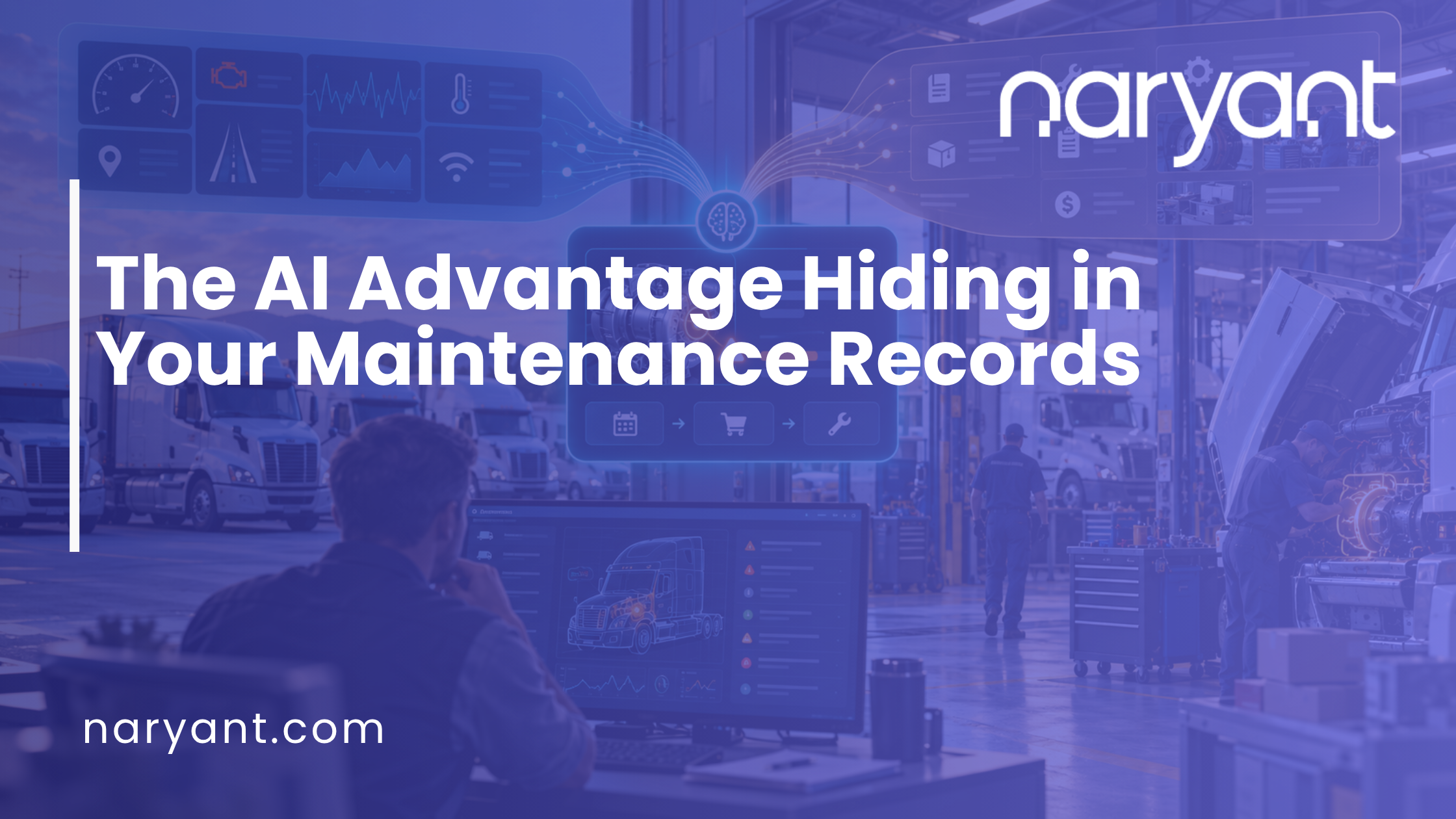
Fleet AI readiness means your prediction models can access both real-time telematics signals and your fleet's own maintenance history, the repair outcomes, technician notes, and parts records that turn raw fault codes into reliable forecasts. Without both halves, AI sees patterns but can't tell which ones matter.
Why does fleet AI need both telematics and maintenance history?
Your telematics system tells you what a vehicle is signalling. Fault codes, engine hours, coolant temperatures, how long it sat idling at the depot. Useful, but a signal on its own doesn't tell you much.
Your maintenance records tell you what actually happened next. Which part got replaced. What the technician found when they opened it up. Whether the same problem came back three weeks later.
A good prediction needs both. Imagine a smoke detector that has gone off a thousand times with no record of which alarms were a real fire and which were burnt toast. You'd stop trusting it pretty quickly. That's roughly where a lot of fleets are with their fault codes.
Why does the best fleet data get left out?
If maintenance history is so valuable, why isn't everyone using it? Mostly because it's a mess.
It lives in the shop system, a few spreadsheets, vendor invoices, and sometimes a binder on a shelf. Technicians write notes the way busy people do: "replaced EGR, rough idle, see prev." Vehicle numbers don't always match between systems, and dates drift. None of it plugs neatly into a telematics feed, so it gets set aside.
The irony is that the data a fleet owns outright (the data no vendor has) is the data it uses least.
What changes when you connect maintenance records to telematics?
Consider a regional distribution fleet running a few hundred tractors. The shop was receiving a steady flood of fault code alerts but couldn't tell which ones mattered. Unplanned breakdowns kept happening, often after alerts had been ignored. Maintenance history was scattered across the shop system, spreadsheets, vendor invoices, and paper, with free-text technician notes and mismatched vehicle IDs.
By locating and consolidating maintenance history from all the places it actually lived, then linking repair records to the correct vehicles and dates so they lined up with telematics, the fleet could focus on one high-cost failure type first. The result: one specific fault code on one engine model was identified as a reliable predictor of turbo failure, and dozens of other codes that fired constantly were confirmed as noise the shop could stop chasing.
A recurring component issue across a group of vehicles also surfaced, repairs that looked routine one by one but, side by side, pointed to a pattern with potential for warranty recovery.
It helps with planning too. If a certain failure tends to appear around a certain mileage on your vehicles, in your climate, on your routes, you can stock the part and book the bay before the breakdown instead of after. That's the real payoff: predictions tuned to how your fleet actually runs, rather than an industry average.
How does a connected approach compare to telematics alone?
| Telematics Only | Telematics + Maintenance History | |
| Alert relevance | Every fault code treated equally — alert fatigue | Codes ranked by actual failure history — shop knows which ones matter |
| Failure prediction | Based on generic thresholds and industry averages | Tuned to your vehicles, routes, climate, and repair patterns |
| Recurring issues | Each repair logged in isolation — patterns invisible | Cross-vehicle patterns surfaced — warranty recovery possible |
| Parts & scheduling | Reactive — parts ordered and bays booked after breakdown | Proactive — stocking and scheduling based on predicted failures |
| Data ownership | Vendor-provided signals — same data every fleet on the platform sees | Your repair history is your competitive edge — no one else has it |
Where should a fleet start with fleet data integration?
You don't need a big program to begin.
Start by finding out where your maintenance history really lives. Most fleets are surprised by how many places that turns out to be.
Then pick one failure that genuinely hurts — the one behind the most downtime or the biggest repair bills, and focus there.
Next, link repairs to the right vehicle and the right dates so they line up with your telematics. It's unglamorous work, and it's where most of the value comes from.
Finally, measure what matters to the business. Downtime avoided and repair costs saved will tell you far more than any model accuracy score.
Why is your maintenance history your competitive edge?
Every fleet on the same telematics platform sees roughly the same stream of data. Your repair history is different. It's shaped by your vehicles, your drivers, your routes and your technicians, and nobody else has it.
That's where the advantage is. Without it, your AI is guessing from half the picture. With it, your fleet has the data fitness to make maintenance decisions it can actually trust.
At Naryant, we help fleets bring those two worlds together. If your repair records are sitting in a drawer (figuratively or literally) let's talk about putting them to work.
Frequently Asked Questions
Telematics tells you what a vehicle is signalling, fault codes, engine hours, temperatures. Maintenance history tells you what actually happened: which part failed, what the technician found, whether the problem came back. A prediction model needs both halves to distinguish real failure patterns from noise.
Start by locating all the places maintenance history lives , shop systems, spreadsheets, vendor invoices, paper logs. Then link each repair to the correct vehicle and the correct date so it lines up with the telematics feed. Focus on one high-cost failure type first to prove the value before scaling.
Fleet AI readiness is the state where your data foundation including telematics signals and your own maintenance history )is clean, linked, and accessible enough for AI models to produce p(redictions you can trust. It means the data your fleet owns outright is working alongside the data your vendors provide.